
NEW DELHI: There is a frequent misconception that heart attacks exclusively affect the elderly; nevertheless, heart attacks are increasingly affecting young people, and a 20-year-old male was recently treated for a serious heart attack at SSB Heart and Multispeciality Hospital in Faridabad.
A young boy arrived at the hospital’s emergency department about 1:30 a.m. with acute chest pain, palpitations, and heavy sweating. Tests revealed an acute anterior wall myocardial infarction, a severe type of heart attack.
Recognising the gravity of the situation, the cardiac doctors at SSB Hospital swiftly conducted a primary angioplasty and stenting within an hour of the patient arriving.
Using specialised catheter-based techniques, they placed an advanced, medicine-releasing stent to restore blood flow to the heart and keep the artery open at the blockage site. Despite the complicated procedure, treatment was initiated without delay; consequently, he recovered well and was discharged in a stable condition.
Heart attacks are no longer limited to older people
According to leading cardiologists, this case reflects a worrying increase in premature heart attacks among people in their twenties and thirties.
“A heart attack in a 20-year-old is a warning signal for the entire society. Young people often believe that only the elderly develop heart disease and may ignore symptoms such as chest pain, breathlessness or unusual sweating. In a heart attack, every minute of delay means further damage to the heart muscle,” said Dr. S. S. Bansal, Chairman and Managing Director, SSB Healthcare.

He said the growing risk of heart disease among young adults may be linked to several factors, including smoking, vaping, tobacco use, a sedentary lifestyle, frequent consumption of processed high-fat foods leading to obesity, diabetes, high blood pressure and high cholesterol along with chronic stress, inadequate sleep and genetic or family-related risk factors.
A lesser-known test may help identify hidden risk
Dr Bansal also highlighted the importance of testing Lipoprotein(a), or Lp(a), a blood test that is still not commonly performed in India but may reveal an important hidden risk factor in young patients. People with premature heart disease or a strong family history tend to have high levels of Lp(a) and should discuss this test with their cardiologist,” he said.
Unlike routine cholesterol levels, Lp(a) is largely determined by genetics, and a person may be at increased risk even when they exercise regularly, maintain a healthy lifestyle or have no obvious risk factors.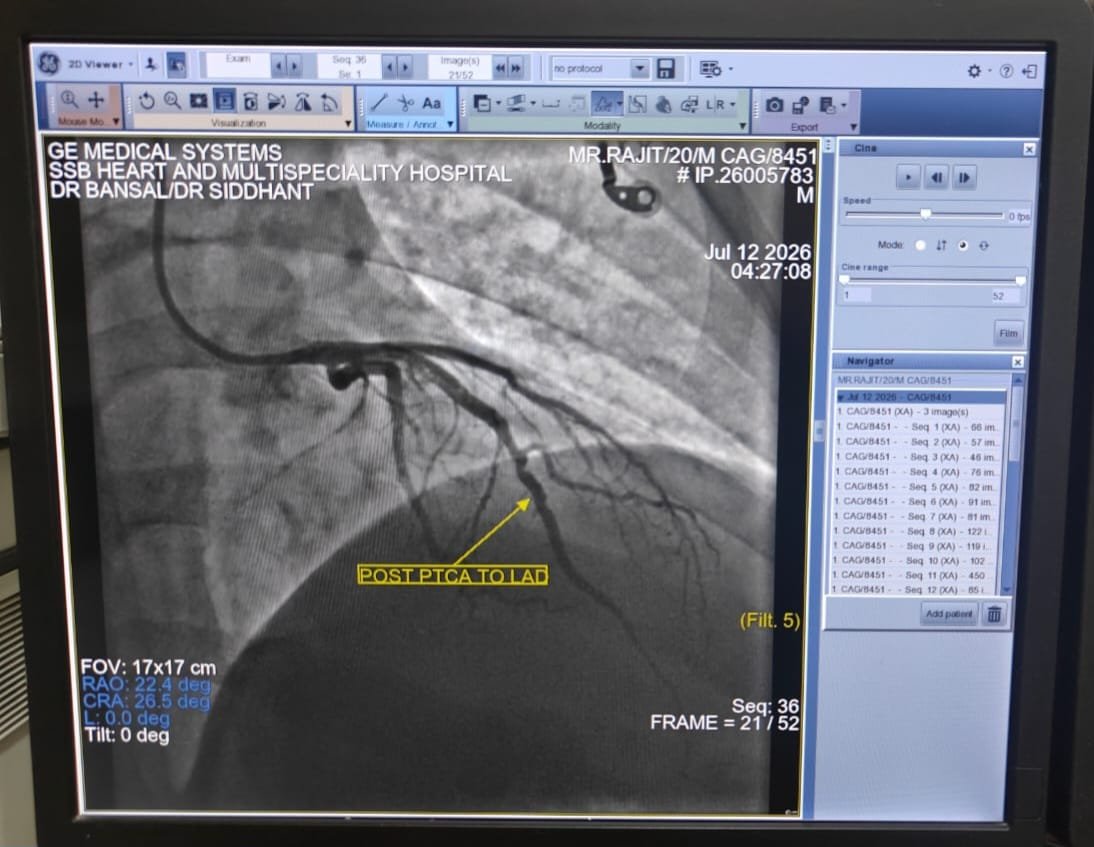
Based on the individual’s overall risk, the cardiologist may also advise a lesser-known test – CT coronary angiography, commonly called a ‘CT scan of the heart’, which produces detailed images of the heart arteries and can help doctors see any narrowing or blockage with only a 15-minute scan.
Doctors advise people to seek emergency medical attention when chest discomfort is accompanied by sweating, breathlessness, nausea, dizziness, palpitations or pain spreading to the arm, shoulder, back, neck or jaw.
“Every minute counts during a heart attack, and any delay can irreversibly damage the heart and lead to lifelong heart problems, reduced stamina, heart failure or even death,” Dr. Bansal said.
In this case, the angioplasty and stenting were completed within one hour of the patient reaching the hospital. The immediate action taken by the cardiac team at SSB Hospital helped save the patient’s life.
SSB Hospital provides round-the-clock cardiac emergency and angioplasty stenting services, ensuring that heart-attack patients can receive immediate treatment even during the night and on holidays.
This case is a reminder that age alone does not protect a person from heart disease. Recognising the warning signs, reaching a hospital equipped with an experienced cardiac emergency team and a round-the-clock cath lab can make the difference between a complete recovery, permanent heart damage and loss of life.
